Dust reduction: key points in 30 seconds
Technical summary:
Dust generation during powder filling is directly linked to product behavior. Some powders are powdery and naturally generate fines during transfer.
To limit these effects, it is necessary to adapt both the dosing technology and the machine design. Vertical auger dosing, combined with suction nozzles connected to a dust extraction system, helps control dust emissions while ensuring precise and clean filling.
Why is dust a problem in powder filling?
Dust is not just a visual issue. It has a direct impact on the performance of the filling line.
In the context of industrial powder filling, it can lead to:
- product losses
- machine fouling
- reduced cleanliness in the production area
- sealing defects on packaging
- additional cleaning constraints
In some cases, the presence of fines can also affect dosing consistency.
Where does dust come from during filling?
Dust generation primarily depends on the product.
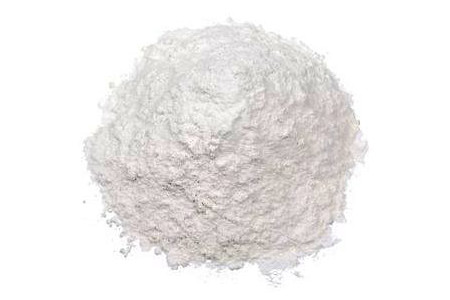
Some powders, such as bicarbonate or certain spices, can be highly powdery. During filling, they release fine particles that disperse into the environment.
Particle size plays a key role. The finer the particles, the higher the risk of dispersion.
Product behavior can also vary:
- depending on the supplier
- from one batch to another
- depending on the product level in the hopper
The same powder can therefore behave differently depending on production conditions, as observed in other dry product applications.
Which technology should be used to reduce dust?
Vibratory feeder: a limited solution
The vibratory feeder works by vibrating the product. This movement lifts the powder and promotes the dispersion of fines.
It is therefore less suitable for powdery products, as it generates more dust and makes it harder to control.
Vertical auger: a more suitable solution
The vertical auger dosing system allows better control of the product during filling.
This technology limits projection effects and helps to:
- reduce the dispersion of fines
- improve filling cleanliness
- ensure more consistent dosing
It is particularly suited to powdery products, such as those encountered in collagen filling or bicarbonate applications.
How to effectively reduce dust?
Integrate a dust extraction system
The most direct solution is to equip the machine with suction nozzles connected to a dust extraction system.
These devices capture fine particles during filling and keep filling heads and the packaging area clean.
Adapt the machine design
The overall machine design plays a key role.
A well-designed filling machine helps to:
- limit dispersion zones
- control product flow
- reduce product losses
Dosing technology and dust extraction must be designed together.
Understand product behavior
Reducing dust also requires a clear understanding of the product.
It is important to analyze:
- particle size distribution
- powdery behavior (dustiness)
- batch-to-batch variability
A very fine or unstable powder will require a different approach compared to a more homogeneous product.
The role of product feeding
The way the product is fed into the machine directly impacts dust generation.
Poor feeding conditions can:
- increase the dispersion of fines
- create flow variations
- reduce dosing stability
On the other hand, a consistent feed helps stabilize product behavior and limit emissions.
Why are trials essential?
Even with a good understanding of the product, its behavior cannot be fully predicted.
Trials make it possible to verify:
- the machine’s ability to handle powdery products
- the efficiency of the dust extraction system
- filling cleanliness
- dosing stability
To secure your project, it is recommended to carry out trials with your product under real conditions.
Conclusion
Reducing dust during powder filling relies on three main factors: the product, the dosing technology, and the machine design.
Powdery products require particular attention. In this context, vertical auger dosing combined with a dust extraction system is an effective solution to limit fine particle emissions and ensure clean, controlled filling.
In all cases, validation through trials remains a key step to secure the process.
MOM Packaging supports manufacturers in more than 60 countries across Europe, Africa, the Middle East, Oceania, the Americas and East Asia.

Louis Derangère
CEO of MOM Packaging — Industrial automation engineer and expert in precision dosing.