This guide is MOM’s reference page for industrial powder filling and includes links to technical guides dedicated to specific powder types.
MOM Packaging has been designing and manufacturing powder filling machines since 1927 for all kinds of powders.
Industrial powder filling
Technical summary:
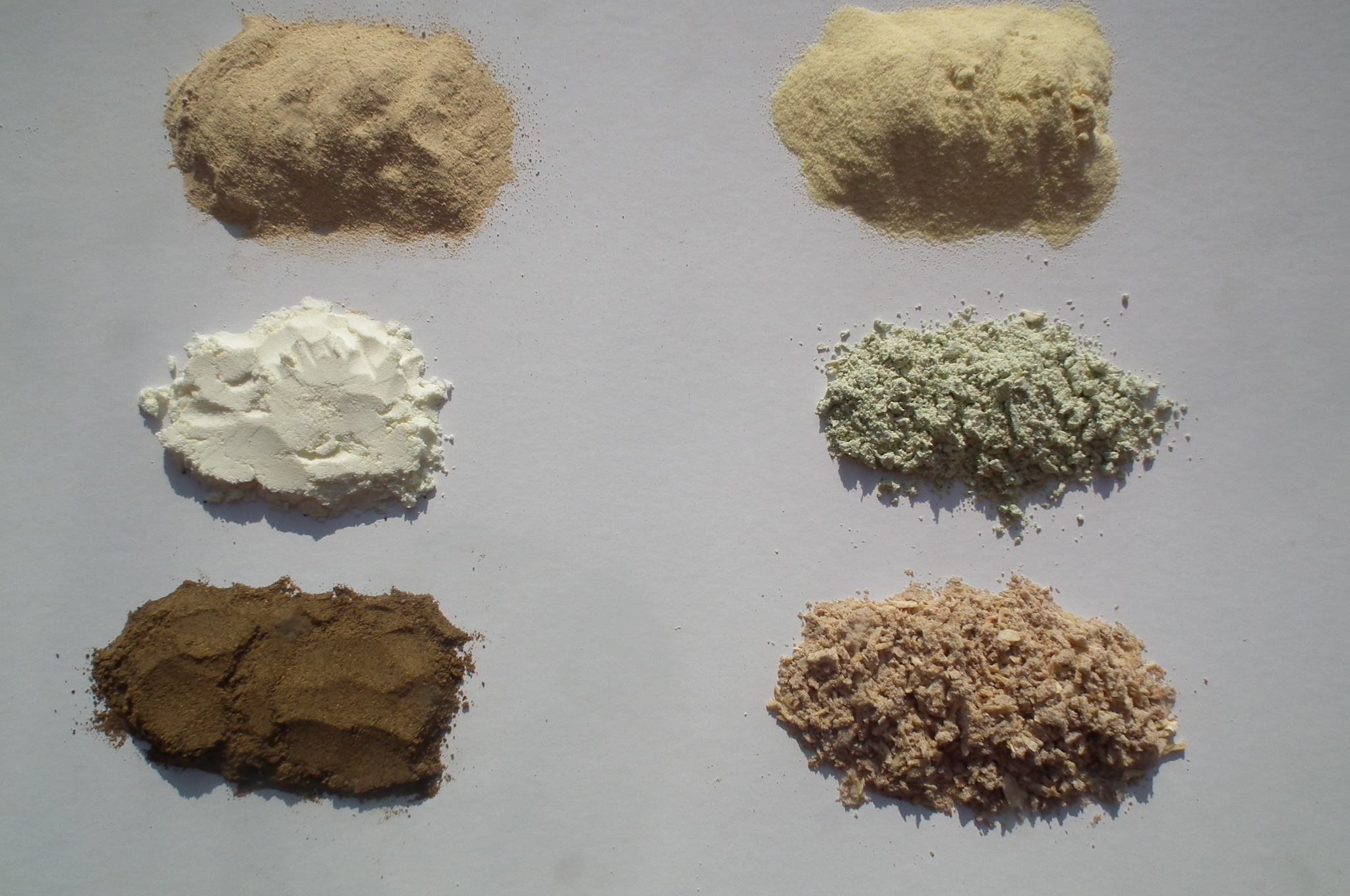
Powders have different physical and chemical properties.
Characterizing a powder makes it possible to define effective dosing tooling.
In addition, the regulatory environment (legal metrology, etc.) and product constraints (ATEX, etc.) must be considered in a powder-filling project.
The main dosing technologies used for powder filling (vibratory trough, flap valve, vertical auger and horizontal auger) are selected according to the product’s characteristics and must be validated through trials on your real powders.
How to use this guide
-
Understand powder behavior
-
Identify the appropriate dosing technology
-
Understand constraints and specific requirements
-
Validate choices through trials
Technical guides by powder type
1. Understanding powder behavior
Key powder characteristics
Before looking at technologies, start by characterizing the product—i.e., understanding the powder’s behavior:
-
Free-flowing / highly flowable powder: flows easily, but bulk density can vary from one lot to another (e.g., printer toner, etc.).
-
Cohesive / caking powder: forms arches, sticks, and can block gravity discharge (e.g., protein powder, milk powder, etc.).
-
Dusty powder: generates fines that can reduce area cleanliness and contaminate sealing zones (e.g., certain spices like cinnamon, metal powders, some bicarbonates, etc.).
-
Heterogeneous powder (blend): risk of segregation/demixing if the flow is not controlled (e.g., certain medicines, spice blends, etc.).
-
Electrostatic powder: adheres to surfaces and can affect packaging cleanliness and filling stability (e.g., collagen, etc.).
-
Hygroscopic powder: absorbs ambient moisture, which can change its behavior (e.g., chicory, etc.).
-
Abrasive powder: wears product-contact parts faster; material selection and maintenance become key criteria (e.g., silica-based products, etc.).
-
Corrosive powder: (e.g., dry chlorinated products, etc.).
Each of these characteristics plays a role in selecting the technology to integrate. That is exactly why MOM emphasizes the importance of knowing powder properties.
Parameters targeted during powder characterization
-
Bulk density (and lot-to-lot variability)
-
Particle size distribution
-
Physical properties (e.g., dustiness) and chemical properties (e.g., hygroscopicity)
This information already strongly guides both the technology choice and the definition of tooling for industrial powder filling.
2. Suitable dosing technologies
Main dosing technologies
There are several major solution families, each with advantages and limitations: dosing by vibratory trough, flap valve, vertical auger, or horizontal auger. In practice, performance depends as much on the technology as on tooling design and product feeding organization.
How to choose the right technology
In industrial powder filling, technology selection depends first on product characteristics, production targets, and the packaging. The machine builder will help you clarify your project:
-
Characterize your powder (flow, density, dust, blend)
-
Set the objectives: dose, throughput, accuracy, cleanliness level, cleaning/recipe change
-
Choose the technology + define the tooling
-
Validate through trials on your powders
It is the powder characteristics and the performance targets that drive the solution.
3. Environments and constraints
Beyond the product itself, the boundaries of an industrial powder-filling project also depend on the environment, compliance, and cleanability.
Legal metrology
Legal metrology covers requirements and control procedures to ensure production quality and traceability.
The term “gravimetric doser” is a protected term. It refers to automatic weighing instruments (AWI).
To manufacture gravimetric dosers, a machine builder must have an EC type-examination certificate.
IQ/OQ/PQ qualification and “data integrity”
In the pharmaceutical sector, IQ/OQ/PQ qualifications are often required.
Increasingly, 21 CFR Part 11 is also required. It governs electronic records/e-signatures (linked to traceability and data integrity requirements).
Other sectors such as cosmetics and the food industry also request qualifications and CFR 21 Part 11.
Cleanrooms and ultra-clean environments
Cleanroom packaging (ISO 14644-1) is made possible by cleanability, the choice of materials/surfaces/processes, and the addition of complementary equipment (e.g., laminar flow).
ATEX zones
In areas subject to explosion risks (ATEX zones), electrical and non-electrical equipment must comply with technical requirements.
Machinery Directive / Machinery Regulation (CE)
In Europe, an industrial machine must meet safety and compliance requirements to be placed on the market (risk assessment, documentation, CE marking). Regulations are evolving: the Machinery Directive is being replaced by the Machinery Regulation (EU) 2023/1230, which applies more uniformly across the EU. In practice, this increases the importance of a clear specification and complete technical documentation from the start of the project.
Filling powder is an expertise: each powder has its constraints, each environment its requirements, and tooling often makes the difference.
4. Industrial validation and tests
To commit to accuracy, throughput, cleanliness, and cleanability, a machine builder must carry out trials.
MOM organizes trials on your powder and your packaging formats to validate the technology, tooling, area cleanliness, and cleaning times. Let’s discuss your specification and production constraints.
Conclusion
Industrial powder filling relies on three decisions: understand the product type, choose the appropriate dosing technology, and validate the solution under conditions close to real production. This guide gathers the fundamental technical principles to structure that decision and guide machine selection. For specific applications, the dedicated guides (collagen, proteins, chicory, etc.) provide deeper, real-world case detail with MOM Packaging’s expertise.