
Coffee filling machine: key points in 30 seconds
Technical summary:
Coffee exists in different forms: whole beans, ground coffee and instant coffee. Each form involves specific constraints in terms of dosing and filling.
Ground coffee is particularly sensitive to air, light, heat and humidity. Its behavior can also change during the filling process, especially as the product level decreases.
In most cases, vertical auger dosing is the most suitable technology for filling ground coffee. It provides precise, clean and repeatable dosing while adapting to different particle sizes.
Coffee: a wide range of product types
Beans, ground coffee or instant coffee
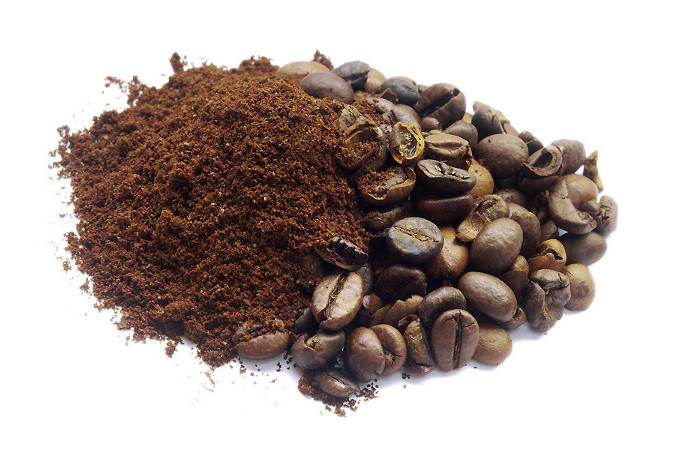
Coffee can be packaged in different forms. As whole beans, coffee behaves like a granular product, while ground coffee behaves like a more or less fine powder. Instant coffee, on the other hand, is similar to a light powder with specific structural characteristics.
There is also a wide diversity of coffees. Dozens of bean varieties exist worldwide. Blends, origins and roasting levels influence not only taste but also product behavior during filling.
The specific case of agglomerated coffee
Agglomerated coffee, often used in certain instant coffee preparations, behaves differently during filling.
Unlike ground coffee, it behaves more like a granular product. However, it remains mechanically very fragile. The granules can easily break during transfer, feeding, or dosing.
Particle size as a key factor in filling
The particle size distribution of coffee is a key parameter. It varies depending on the preparation method and directly affects product flow.
A very fine grind, used for espresso or Turkish coffee, corresponds to particles smaller than 1 mm. A medium grind, suitable for filter coffee, is generally below 1.5 mm. Coarser grinds, used for French press or similar methods, involve larger particles.
These variations influence bulk density, flowability and dosing stability, which are also key parameters in dry product applications.
The role of grinding in product behavior
Coffee grinding does not only affect taste; it also impacts industrial product behavior.
By increasing the surface area in contact with water, grinding enables the extraction of aromatic compounds. It also modifies powder structure, cohesion and flowability.
These phenomena are comparable to those observed in other technical powders.
Ground coffee behavior
Ground coffee is a powder that generally flows easily. It behaves similarly to free-flowing powders.
However, as the hopper empties, the product can become more cohesive, which may lead to flow variations. This type of behavior is also observed in other industrial products, particularly in chicory filling applications.
Sensitivity to the environment
Ground coffee is highly sensitive to its environment. Exposure to air, light, heat and humidity can quickly degrade its properties and alter its aromas.
These constraints must be considered in the design of the filling line, particularly regarding materials and product interfaces, as explained in the technical specificities of filling machines.
Blended coffee
In the case of blends, such as Arabica and Robusta, segregation phenomena may occur. This can lead to variations in product composition during filling.
This issue is also encountered with other powders and requires an adapted process and dosing system design.
What packaging is used for coffee?
Coffee is packaged in a wide range of formats depending on usage and market requirements. These include bags, doypacks, jars and packaging under protective atmosphere.
The choice of packaging directly impacts the line configuration, particularly in terms of production rate and automation, as detailed in the selection of filling machines.
Which filling machine should be used for coffee?
The choice of dosing technology
The choice of technology depends directly on the form of the coffee and its behavior.
Ground coffee is typically processed using a vertical auger filler, which efficiently handles powders while ensuring a high level of dosing accuracy.
Coffee beans can be dosed using technologies adapted to granular products, while instant coffee behaves more like a powder.
Flow stability and dosing consistency
Even though ground coffee flows easily, its behavior can change depending on the product level in the hopper.
Maintaining a constant level in the hopper is a key factor in stabilizing dosing, as is also the case in protein powder filling applications.
Control of the filling environment
Coffee filling requires particular attention to the environment. It is important to limit fine particle dispersion while protecting the product from external factors.
These constraints are common to many powders and are integrated into the design of the line.
Why the vertical auger is often the right technology
Vertical auger dosing allows powders to be filled with precision, cleanliness and consistency. It adapts to different coffee particle sizes and helps reduce variations related to product behavior.
This technology is widely used for industrial powder filling.
Comparison of constraints and filling solutions
| Product constraint | Impact on filling | Technical solution |
|---|---|---|
| Particle size variability | Flow behavior variation | Vertical auger dosing |
| Environmental sensitivity | Aroma degradation | Controlled environment |
| Cohesion at low hopper level | Dosing instability | Constant hopper level |
| Segregation risk | Product inconsistency | Adapted process design |
| Fine particles | Dust and product loss | Dust control |
Product feeding
Coffee feeding must be stable to ensure consistent dosing. Variations in hopper level can lead to dosing deviations.
Maintaining a constant level and controlled feeding helps stabilize the operation of the coffee filling machine.
Testing and validation of coffee filling machines: what to check
Validation under real conditions is essential to secure a coffee filling project.
It allows verification of dosing accuracy, repeatability and product behavior. It also helps assess the impact of particle size and blend stability.
To do so, carry out tests with your coffee product in your packaging.
Key takeaways
Coffee is a complex product to handle due to the diversity of its forms, its particle size variability and its sensitivity to the environment.
Grinding plays a key role both in the final product quality and in its behavior during filling.
In this context, vertical auger dosing is generally the most suitable solution to ensure precise, clean and consistent filling.
MOM Packaging supports manufacturers in more than 60 countries across Europe, Africa, the Middle East, Oceania, the Americas and East Asia.

Louis Derangère
CEO of MOM Packaging — Industrial automation engineer and expert in precision dosing.