Windshield Washer Fluid Filling Machine: Key Points in 30 Seconds
Technical summary
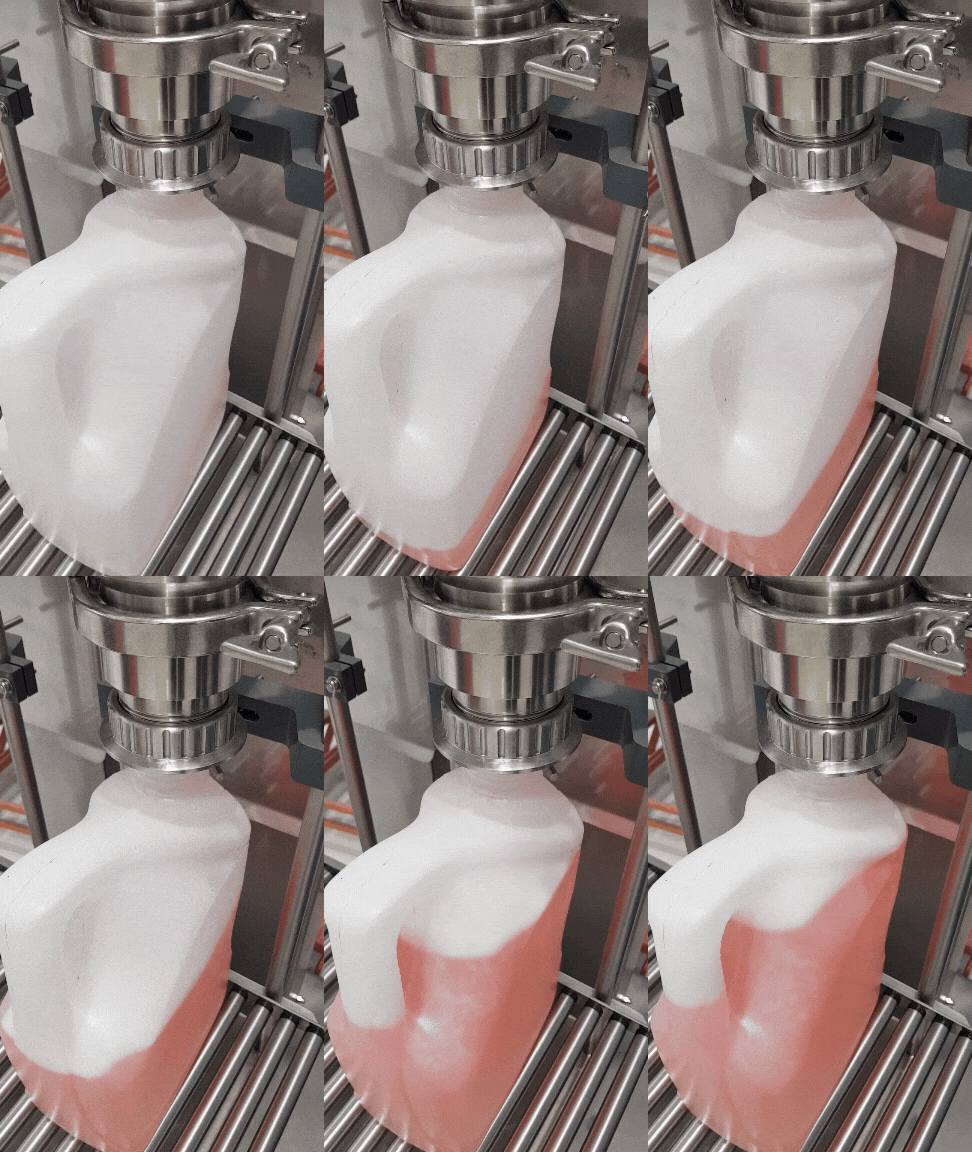
Windshield washer fluid is a liquid product that often generates significant foam. As a result, industrial filling can quickly become complex. If the machine is not properly adapted, foam may overflow from the container, reduce production speed, and compromise clean filling.
In practice, a windshield washer fluid filling machine must simultaneously manage:
- foam generation
- dripping at the end of dosing
- the absence of stringing
- container cleanliness after filling
Today, orifice nozzles generally provide the most suitable solution for highly foaming products. Indeed, they promote a diffused and laminar flow while eliminating dripping at the end of dosing.
Why does windshield washer fluid filling involve specific constraints?
Windshield washer fluid belongs to the category of foaming products. In practice, the behavior of the liquid depends heavily on its formulation, packaging, and filling conditions.
If the machine does not properly control the dosing process, several issues can quickly arise:
- foam overflow
- container contamination
- reduced production speed
- unstable dosing
- additional line cleaning
In this context, clean filling becomes a key challenge. In other words, the machine must not only fill quickly but also fill cleanly.
Why does windshield washer fluid foam so much during filling?
In fact, foam mainly appears when the liquid undergoes a turbulent flow during dosing.
The more turbulent the flow becomes, the more foam the product generates. Conversely, a laminar flow significantly reduces foaming and stabilizes the filling process.
The real challenge is therefore to transform turbulent flow into a more controlled and diffused flow without reducing industrial line performance.
What requirements should you request from your machine manufacturer?
To fill windshield washer fluid under the right conditions, several elements should be validated with your machine manufacturer.
Ensure clean filling
First, the machine must guarantee a high level of clean filling.
In practice, it must simultaneously manage:
- foam
- dripping at the end of dosing
- the absence of stringing
- container cleanliness
As a result, clean filling reduces product loss and limits cleaning operations.
Reduce cross-contamination risks
In addition, some technologies insert the nozzle directly into the container.
However, this approach may create a risk of cross-contamination. If a container is contaminated, the nozzle may also become contaminated and subsequently affect the following containers.
In certain industries, this risk becomes difficult to accept.
Choose a technology adapted to the actual product behavior
Finally, there is no universal nozzle capable of handling all liquids.
The right choice depends on:
- the level of foam generated
- the characteristics of the liquid
- the required production speed
- the expected level of cleanliness
That is why production trials remain essential before finalizing a technical choice.
Summary of windshield washer fluid filling constraints
| Product constraint | Impact on filling | Technical solution |
|---|---|---|
| Highly foaming product | Overflow and unstable dosing | Orifice nozzle |
| Turbulent flow | Excessive foam generation | Diffused and laminar flow |
| Dripping at the end of dosing | Container contamination | Nozzle capillary effect |
| Cross-contamination risk | Batch contamination | Nozzle without intrusion into the container |
| Format changes | Long adjustment times | Easily removable nozzle |
Windshield washer fluid filling technologies
Dive nozzles: an initial solution
Historically, dive nozzles provided an initial solution to foam-related issues.
The principle is simple: the nozzle enters the bottom of the container and gradually rises during filling.
In many cases, this method effectively reduces foam overflow.
However, it also presents several limitations.
First, it reduces production speed. Indeed, the nozzle must move down before dosing and rise again at the end of the cycle.
In addition, format changes require more adjustments. Operators must notably adjust:
- the upper nozzle position
- the lower nozzle position
- the up-and-down movement speed
- the dosing flow rate
Furthermore, some products create dripping at the end of dosing.
Finally, this technology increases cross-contamination risks. If the nozzle enters a contaminated container, it may contaminate the entire batch.
Grid nozzles: better flow control
Next, manufacturers developed grid nozzles.
Their objective is to transform turbulent flow into laminar flow. Thanks to the grids, the product foams less during filling.
In addition, the grids retain droplets through capillary action. As a result, they significantly reduce the risk of contaminating the container at the end of dosing.
In approximately 75% of cases, this technology works effectively.
However, grid nozzles sometimes reach their limits with highly foaming products.
Please note: grids are not suitable for all liquids. When used with viscous products, they may create stringing, slow down dosing, and contaminate packaging.
Nozzles with restrictors: the most suitable solution
Today, nozzles with restrictors generally represent the most effective solution for filling highly foaming products, such as certain windshield washer fluids.
Their main difference lies in one key element: the orifice restriction.
This restriction maximizes the action of the grids to achieve a diffused and laminar flow.
As a result, orifice nozzles provide several benefits:
- excellent control of highly foaming products
- no immersion into the container
- reduced cross-contamination risks
- elimination of end-of-dose dripping through capillary action
- lower cost than dive nozzles
- simplified dismantling and cleaning
- quick nozzle replacement
In this context, this technology generally offers the best balance between speed, cleanliness, and industrial simplicity.
Which parameters actually influence production speed?
In practice, several parameters directly influence the speed of a windshield washer fluid filling machine:
- the level of foam generated
- container geometry
- neck diameter
- allowable flow rate without overflow
- the nozzle technology used
As a result, poor foam control can quickly reduce the actual performance of the filling line.
Why do production trials remain essential?
Even if several windshield washer fluids appear similar, their actual behavior may vary.
That is why production trials remain essential.
They notably help verify:
- filling cleanliness
- actual foam behavior
- achievable production speed
- absence of dripping
- absence of stringing
- equipment cleanability
- process robustness
To secure your project, carry out filling trials with your product and packaging.
Conclusion
Windshield washer fluid filling involves specific constraints related to the product’s foaming behavior.
The objective is therefore not only to fill quickly. Manufacturers must also ensure clean dosing, without excessive foam, dripping, or cross-contamination.
Historically, dive nozzles and later grid nozzles improved filling performance. Today, orifice nozzles generally provide the most suitable solution for highly foaming products.
Finally, as with any industrial project, production trials remain essential to secure the technology choice.
Over the past years, MOM Packaging has supplied liquid filling machines.
MOM Packaging has designed dosing and filling machines since 1927, with historical expertise in processing liquids and fluid-to-viscous products.
MOM Packaging supports manufacturers in more than 60 countries across Europe, Africa, the Middle East, Oceania, the Americas and East Asia.